ADHD, Perimenopause and Getting Started in Midlife
When your brain knows what to do but will not start
A week of busy classes, blank choreography, admin momentum and one very relatable midlife starter motor.
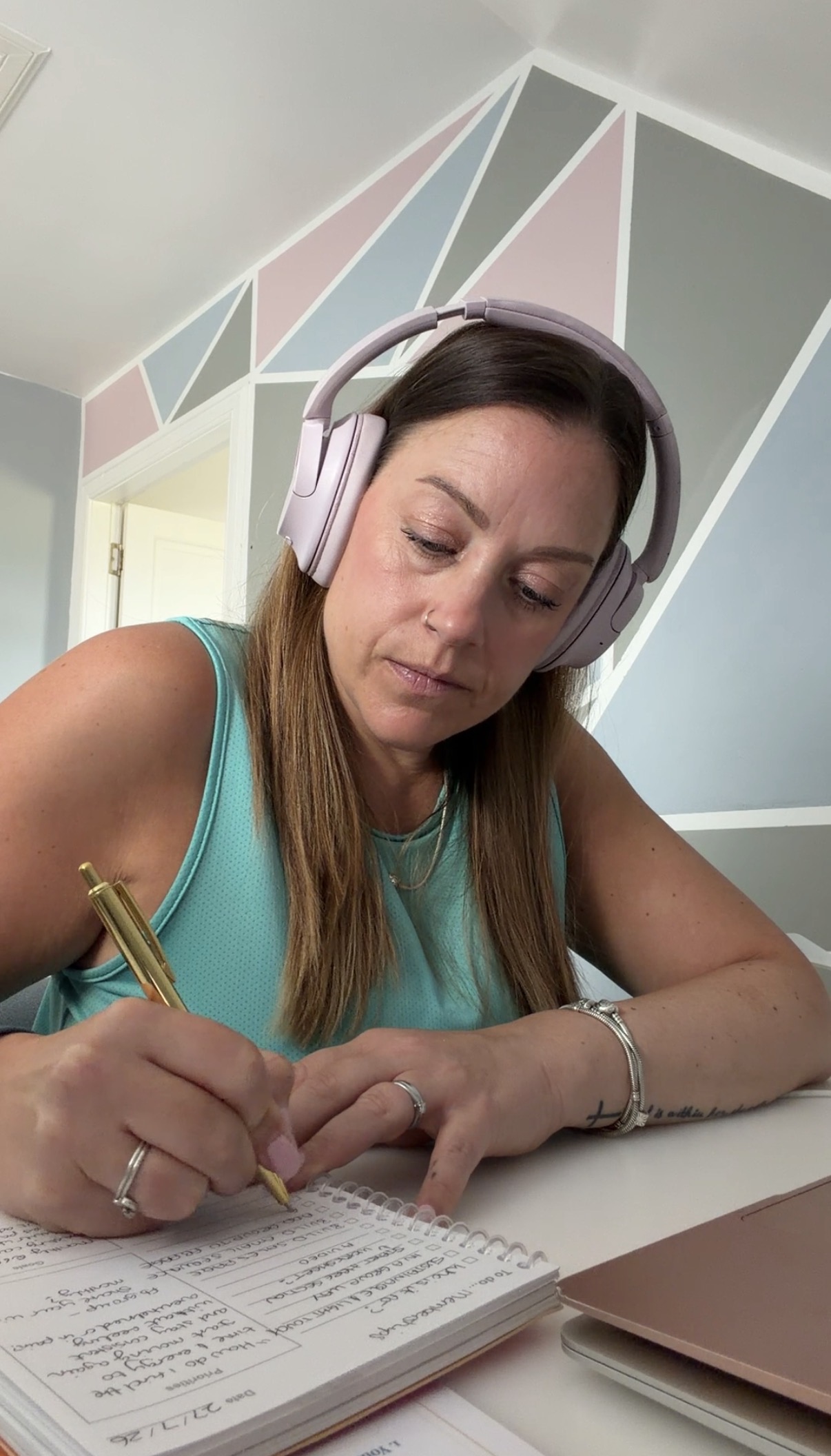
On Wednesday morning, I was sitting outside the kirk thinking, I know what I need to do. Why can’t I make myself start?
I had just taught a class. I was tired after two poor nights of sleep, my head was already full of everything happening next week, and the list in front of me seemed to require a version of Donna whose brain had actually turned up for work.
Mine was sitting there with the key in the ignition, making a faint clicking noise. 😂
That is the maddening part. I was not short of ideas. I was not unclear about what needed doing. I wanted to get on with it.
But wanting to start and being able to start are not always the same thing—especially with an ADHD brain, and especially in midlife when sleep, hormones, energy and concentration can all decide to join the meeting uninvited.

The starter motor eventually caught
Here is the funny thing.
By Saturday, when I looked back properly, it had actually been a really good week.
Classes had been busy. Line dancing had a lovely turnout. I taught an extra class and had warm feedback from women who were enjoying the new material and noticing their own progress.
And somehow, after all that sitting-there-not-starting frustration, my brain engaged and I got lots of admin done too.
This is one reason I wanted to write about it. We can judge an entire week by the moment in which we felt stuck. We remember the hour when our brain would not cooperate and forget the people we helped, the jobs we completed, the movement we enjoyed and the fact that we kept going in a very human, imperfect way.
We are particularly skilled at this as women in midlife. We carry work, family, household admin, caring, appointments and everybody else’s missing information. Then, when the mental load finally makes the wheels spin, we call ourselves lazy or disorganised.
Perhaps the truer sentence is: my brain was overloaded, my sleep was poor, and starting was hard.
That is not an excuse. It is useful information.
When something you know simply disappears
The frustration does not stop at the desk.
I can prepare choreography, dance it through and know exactly what I am teaching. Then I stand in front of a class and suddenly the next step has vanished.
I can even look at the choreography written on the page and see perfectly ordinary words—but the words do not connect to movement in my head.
That is hard when you have taught for years, particularly when new people are in the room and you want them to feel confident in your hands. Your experience has not disappeared, but in that moment it can feel as though somebody has removed the correct file from your brain and replaced it with a picture of a potato.
The answer might be to print the choreography, use stronger visual cues, practise in the teaching space or give myself a more obvious prompt. I am still working out what genuinely helps.
What does not help is standing there silently attacking myself for finding something difficult.
ADHD, perimenopause and what we actually know
Task initiation, working memory, planning and switching attention sit within the broad set of skills often called executive functions. These can be difficult for people with ADHD. Perimenopause can bring its own problems with sleep, memory and concentration; the NHS notes that brain fog can feel worse when sleep is poor and tiredness is high. [NHS: menopause and perimenopause symptoms](https://www.nhs.uk/conditions/menopause-and-perimenopause/symptoms/)
Researchers are now looking more closely at how hormonal stages may interact with ADHD in women, but this is still an under-researched area.
A 2026 survey of 600 females with diagnosed or self-identified ADHD traits found that many participants perceived their symptoms as worse around menopause. However, the researchers’ cross-sectional symptom scores were similar across hormonal life stages. In other words, the lived experience signal is important, but the study does not prove that menopause directly worsens ADHD for every woman. [Journal of Psychiatric Research study on ADHD across hormonal life stages](https://pubmed.ncbi.nlm.nih.gov/41330200/)
That careful distinction matters.
I cannot tell you that every blank moment, unfinished job or forgotten word is caused by oestrogen, ADHD or perimenopause. I can tell you that many women are describing the collision of attention difficulties, brain fog, poor sleep and a heavy mental load—and that we deserve better than being told simply to try harder.
If changes in memory, concentration, mood or sleep are new, severe or affecting daily life, please speak to a qualified health professional rather than trying to diagnose the cause from a blog.
Support your capacity, not just your diary
Next week is going to be the mother of all busy weeks.
Alongside building The Midlife Thrive Club, I run Orkney Dance & Fitness—ODAF—a community-focused non-profit social enterprise creating inclusive opportunities to move and connect across Orkney’s rural and island communities.
That brings wonderful opportunities. This week I had an exciting conversation with television people who had found our story and wanted to explore how it might be featured. Nothing is guaranteed, but simply knowing somebody found the work and wanted to hear more felt huge.
It also means classes, equipment, admin, people, planning and a constant stream of things requiring a decision. This weekend, my husband is helping me empty the van and collect chairs for the Little Kirk, the former church building we are developing as a community movement and wellbeing space.
Notice the important words there: helping me.
I am also food shopping so there is something sensible in the house when next week gets full. I am going to church. We are having friends for roast dinner. And, on the other side of the busy spell, I have booked myself a cheeky massage.
Not because rest must be earned by reaching some imaginary level of productivity.
Because Future Donna is a real person too, and she needs support.
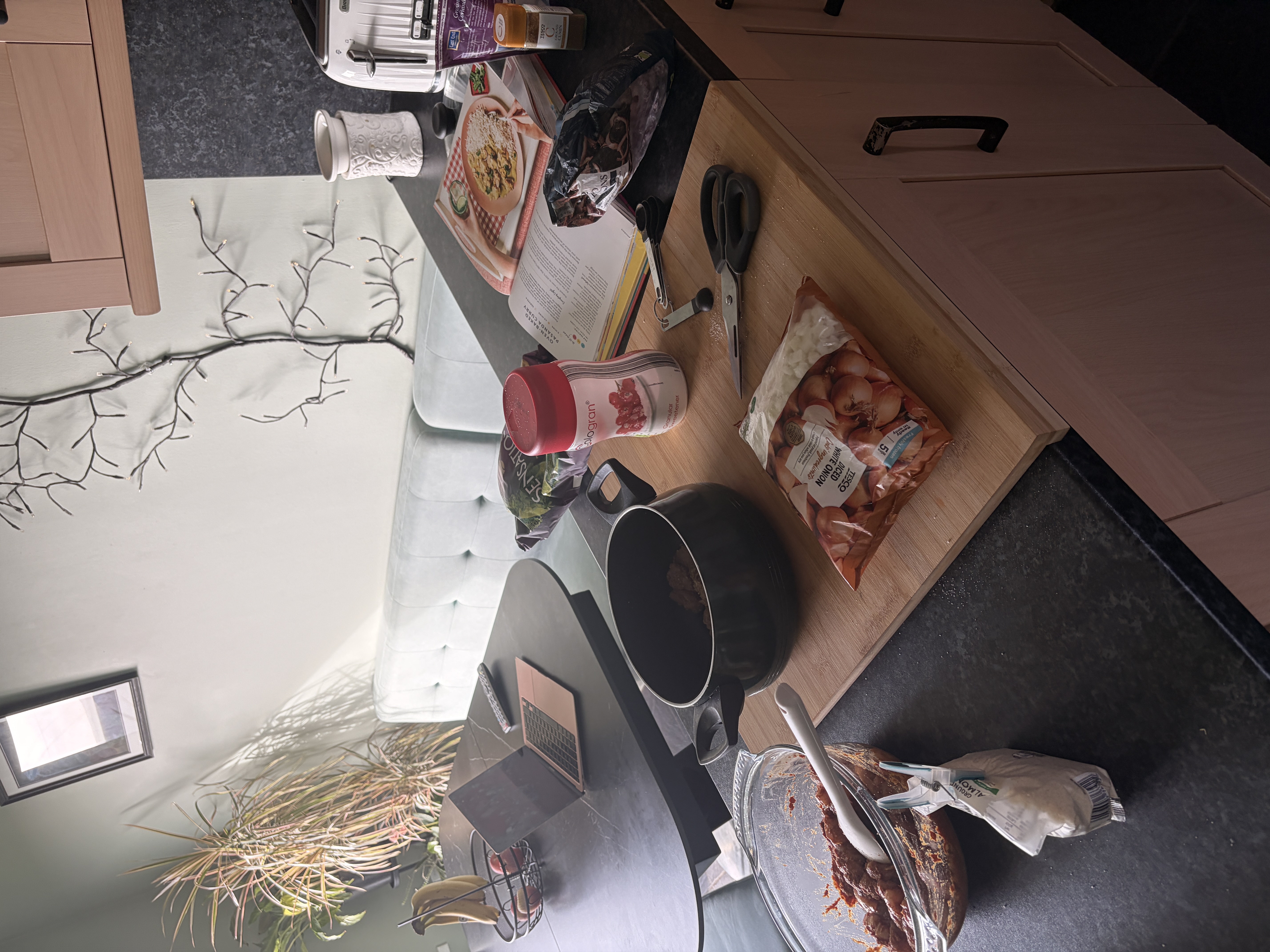
There is a difference between making a plan and demanding that your body and brain become machines.
Preparation can reduce friction. Support can make the load carryable. Rest can protect what energy remains. None of those things means we are failing to cope
Move | Connect | Thrive when the engine is reluctant
This week reminded me that these three words do not need to become three more enormous tasks.
Move might mean teaching a full class. It might also mean putting on one song, stretching while the kettle boils or walking around the block to help your brain change gear.
Connect might be the women in class telling you what they are enjoying. It might be a friend at Sunday lunch, a partner helping with chairs or admitting to somebody trustworthy that your head is full.
Thrive does not mean functioning beautifully every minute. Sometimes it means putting food in the fridge, using a prompt, accepting help and refusing to measure the whole week by its most frustrating hour.
And sometimes connection comes back to you in the loveliest way.
Last Sunday I asked readers to tell me about a win. One woman replied to say that she had sold some of her artwork and it was going all the way to America.
Then, a few hours after the email landed, I walked into a church I had never visited before. I had not seen her for years—and there she was.
“I’ve just sent you an email!” she said.
What are the chances? 😂
Her win mattered. My good classes mattered. Getting the admin started mattered. The blank choreography moment was real too—but it did not get to cancel everything else.
Your Ridiculously Small Sunday Challenge
Write down one thing you started this week.
Not everything you finished. Not the rest of the list. Just one thing that moved from stuck to started—even if all you did was open the document, put your trainers by the door or ask somebody to help.
Give it ten seconds of credit before your brain says, “Yes, but…”
That is all.
Until next Sunday 🩷
Donna xx
The Midlife Thrive Club
Move | Connect | Thrive
Let’s simply start together.
If you’d like a realistic way to begin moving again, download my free 15-Minute-a-Day Magic Menopause Reset. No punishing workouts and no complete life overhaul—just manageable movement for real midlife weeks.
This article provides general information and is not a substitute for individual medical advice. Speak to an appropriately qualified healthcare professional about symptoms, recovery after a procedure or movement that may need to be adapted for your circumstances.