How to Feel More Confident in Midlife Before You Feel Ready
Maybe You Don’t Need to Feel Ready
How confidence grows when midlife asks us to begin before everything is neatly figured out
Welcome to the very first Sunday Morning Thrive blog.
I feel as though I should begin by introducing myself properly—although “properly” may be stretching it.
I’m Donna. I’m 42, live in Orkney and am a fitness instructor, business owner, wife, mum and serial generator of ideas.
I also have an ADHD brain that usually has approximately 17 tabs open at once. Three of them are playing music, one is asking whether I remembered to take something out of the freezer and another is wondering when I last washed my hair.
Alongside all that, I’m navigating my own midlife and perimenopause while building The Midlife Thrive Club: a place where women can move more, feel stronger, connect with other women and start finding themselves again.
Not become an entirely new person.
Not shrink themselves into somebody else’s idea of a “better” body.
Just feel more like themselves again.
That is what Move | Connect | Thrive means to me.
And this week has been a perfect example of why I’m creating it.
This week, I did several things before I felt ready
I officially completed my MenoFit training.
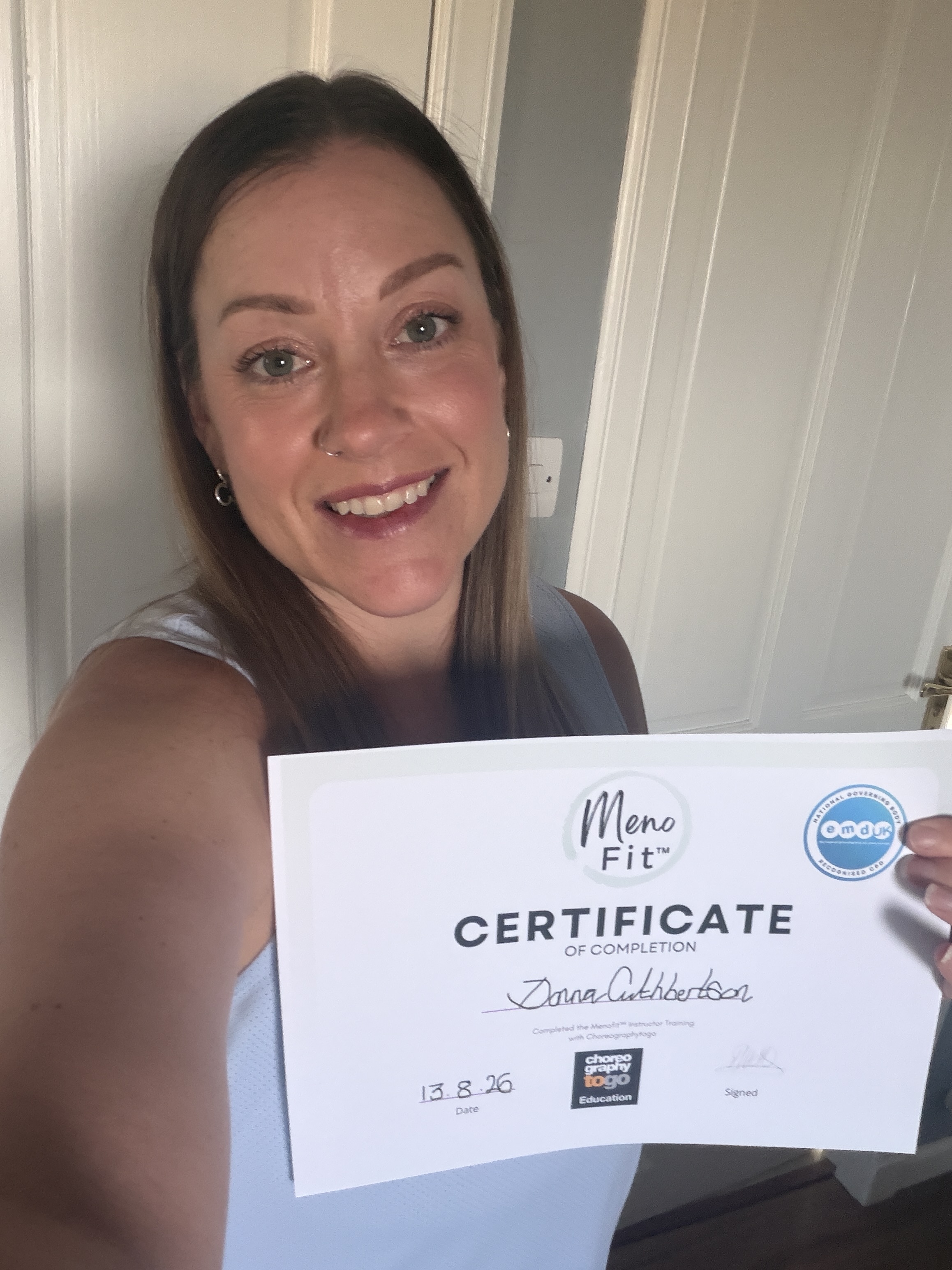
This qualification brings together movement, strength, menopause support, lifestyle and the realities of helping women exercise when their energy, confidence and bodies may all feel as though they have changed the rules without telling them.
When I shared the news, the response was incredible. Women commented, celebrated and messaged me because this is something they need.
That mattered.
Not simply because it made me feel good—although it did—but because it confirmed that women are looking for sensible, supportive menopause information that doesn’t make them feel broken, lazy or as though they should already know what to do.
I also did a BBC Radio Scotland interview.
Yes, me.
Even typing that produces a small voice in my head saying, “Are you quite sure they meant to phone you?”
I’ve been looking back over the journey of my fitness business, ODAF, as part of work exploring a future wellbeing project for Orkney. It meant remembering where I started, what has grown and all the moments when I said yes before I knew exactly how I was going to do it.
Meanwhile, normal life continued.
Classes needed teaching. People needed feeding. Children needed transporting. A slow-cooker chilli had to be produced. At one point, one of the day’s logistical solutions involved the sentence, “Just throw her out at the police station.”
Her dad works there. No children were abandoned during the making of this blog.
I also continued building The Midlife Thrive Club—the website, programmes, workshops, free resources, emails and approximately nine million little jobs that appear whenever you decide to create something new.
All of this has led me back to one thought:
What if we have confidence the wrong way round?
Confidence often comes after the action
We tend to imagine confidence as something that arrives first.
One morning we’ll wake up feeling completely prepared, clear-headed and certain. Then we will apply for the opportunity, walk into the gym, start the business, book the class, have the difficult conversation or finally do the thing we have been thinking about for months.
Except that morning rarely comes.
Most of the meaningful things I have done didn’t begin with confidence.
They began with nerves.
They began with a slightly wobbly yes.
They began with me thinking, “Who on earth do I think I am?”
Then I did the thing anyway.
The confidence came afterwards, because I had evidence that I could survive it.
I didn’t start ODAF because I felt completely ready to run a fitness business. I didn’t teach my first class because I had suddenly become fearless. I didn’t do a radio interview because being interviewed had magically stopped feeling intimidating.
I took the step, survived the discomfort and became a little more confident because of it.
Confidence didn’t open the door. Action did.
Why movement and strength matter in midlife
This is one reason I’m so passionate about helping midlife women become stronger.
Strength training is not merely about changing how we look.
It can support our muscles, bones, physical function and ability to continue doing everyday things as we age. Current NICE menopause guidance specifically recommends discussing the importance of maintaining muscle mass and strength through physical activity.
The World Health Organization also highlights the wider benefits of regular physical activity for mental health, brain health and overall wellbeing.
Recent research continues to strengthen the case. A 2026 review of resistance training in postmenopausal women found benefits for cardiovascular health, while a 2025 review of randomised trials found that exercise can improve symptoms of depression in adults experiencing depression or anxiety.
That doesn’t mean a set of dumbbells will instantly solve every life decision or make us stride into every room like Beyoncé.
If only it were that simple.
But learning to become physically stronger can give us another kind of evidence:
“I can learn this.”
“I can do something that once intimidated me.”
“My body is still capable.”
“I belong here too.”
For many women, that feeling matters enormously.
The simple version: Strength training in midlife isn’t punishment for what your body looks like. It’s an investment in what you want your body to keep doing.
The gym is not reserved for people who already know what they’re doing
Gym intimidation is real.
Many midlife women tell me that they would like to become stronger, but they don’t know where to start. They worry that everyone else understands the equipment. They imagine that people will be watching them.
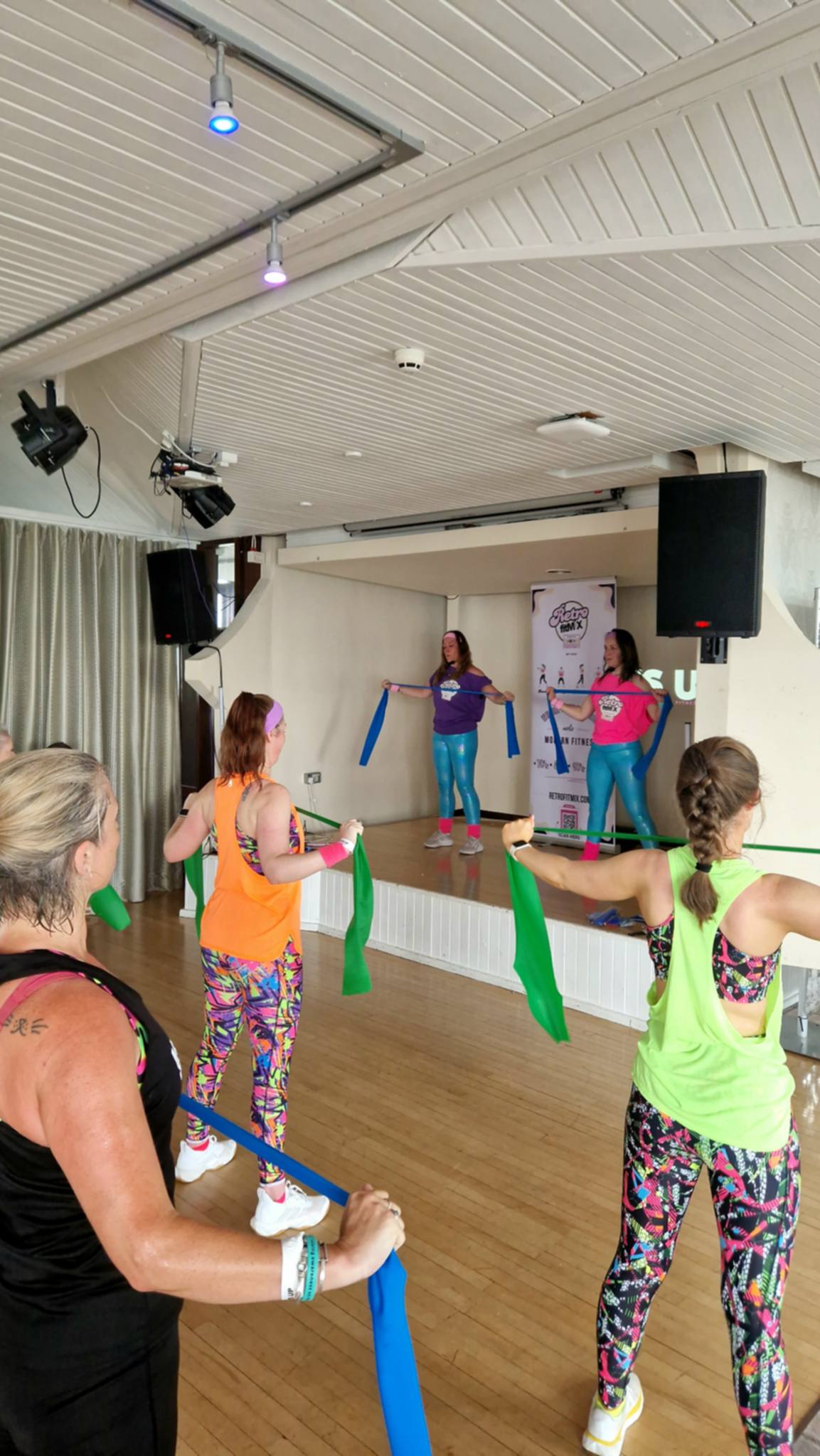
Generally, everyone else is too busy wondering whether they are doing their own exercise correctly—or trying not to make eye contact while performing something undignified with a resistance band.
You do not need to be fit before joining a fitness class.
You do not need to know how everything works before entering a gym.
You do not need a smaller body, matching outfit or full face of makeup.
I have taught classes after spending most of the day in my pyjamas. I have planned content shoots before remembering that hair washing and makeup might need to be included in the schedule.
Perfection is not the entry requirement.
Beginning is.
Start with the corners 🧩
When a puzzle feels overwhelming, we don’t usually throw all the pieces into the air and hope a complete picture lands on the table.
We find the corners.
Then the edges.
Then one piece that connects to another.
Midlife change can work the same way.
Perhaps you want to feel stronger, but the idea of completely transforming your routine feels impossible.
Your corner piece might be:
Putting your trainers by the door.
Taking a ten-minute walk.
Booking one beginner-friendly class.
Learning one strength exercise.
Asking somebody to show you how a piece of equipment works.
Perhaps the change isn’t about exercise.
Maybe you want to apply for something, begin a course, create a business, make new friends or have a conversation you have been avoiding.
Your first corner might be opening the document.
Writing the first sentence.
Sending one message.
Finding the phone number.
You don’t have to complete the whole puzzle today.
You only need to find one piece.
Your ridiculously small Sunday challenge
Think of one thing you have been waiting to feel ready for.
Now make the first step so small that your brain has very little room to argue with it.
Not:
“I’m going to overhaul my entire life on Monday.”
Try:
“I’m going to walk for ten minutes after lunch.”
Not:
“I need to become confident enough to join the gym.”
Try:
“I’m going to look at the timetable.”
Not:
“I must finally launch the entire idea.”
Try:
“I’m going to write down what the idea actually is.”
Small steps aren’t meaningless. They are how we build evidence.
And evidence is what gives confidence somewhere to grow.
Choose one thing. Make the first step tiny. Do it before confidence catches up.
I’m building this before I feel completely ready too
The Midlife Thrive Club is becoming real.
There is now a website. There are programmes being developed, an upcoming MenoFit workshop, future retreats, free resources and plans for a community where women can move, connect and thrive together.
There are also unfinished pages, funnels that test my patience and moments when I wonder whether I should have waited until everything was perfect.
But waiting for perfect would mean never beginning.
So this is me taking my own advice.
Publishing the first blog.
Sending the first Sunday email.
Doing it a little nervously and trusting that confidence will catch up.
Because most of the best things in my life started in exactly the same way:
One class.
One idea.
One conversation.
One slightly terrifying yes.
Before you go
What is one thing you have been waiting to feel ready for?
And what is the smallest possible step you could take this week?
Keep it simple. Find the first corner.
You don’t need to feel fearless.
You just need somewhere to begin.
If you would like a warm, honest and occasionally chaotic dose of midlife support each Sunday, join Sunday Morning Thrive.
We’ll talk movement, menopause, strength, confidence, healthy ageing and the realities of trying to look after yourself while also remembering what you went upstairs for.
Until next Sunday 🩷
Donna xx
The Midlife Thrive Club
Move | Connect | Thrive
This blog provides general information and is not a substitute for individual medical advice. If you are worried about symptoms, your health or beginning a new exercise programme, speak to an appropriate healthcare professional.