How to Recognise Your Progress in Midlife | Sunday Thrive
What if you let yourself see it too?
The strange midlife skill of believing the evidence of your own progress — even when your backpack, brain and life still look gloriously untidy
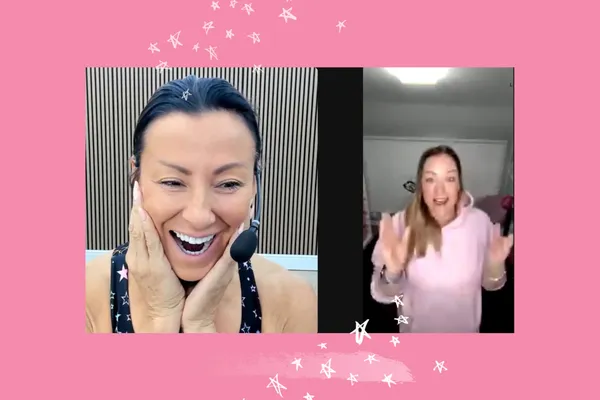
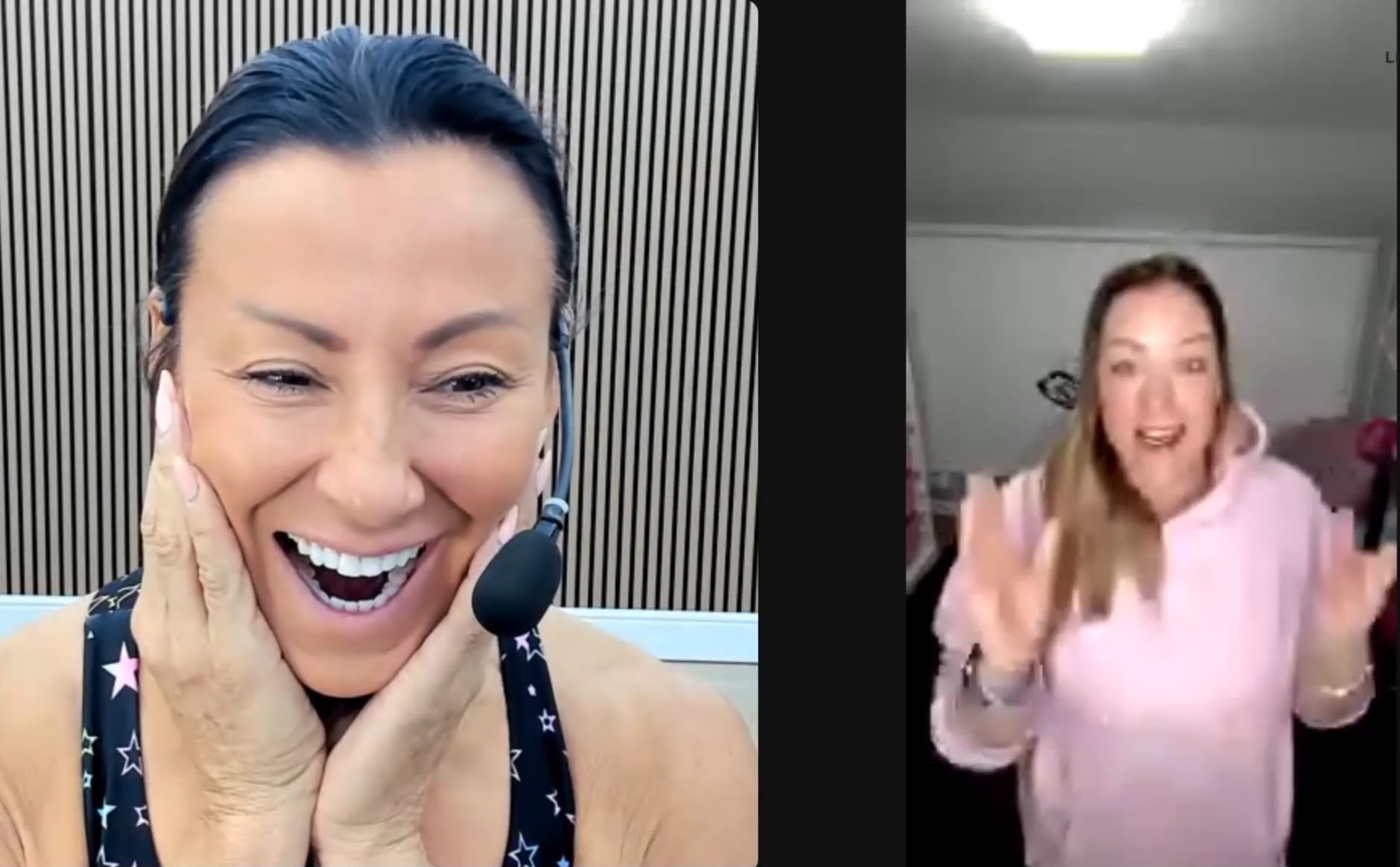
On Friday night, at about half past ten, I sat down to watch a recording of myself talking to Rachel Holmes.
Rachel is somebody I have followed and learned from in the fitness industry for years. This time, though, I was not watching her teach me. I was the guest, talking for half an hour about Orkney Dance & Fitness, the community organisation I have built here in Orkney.
And somewhere between hearing my own story, noticing that I actually sounded as though I knew what I was talking about, and listening to Rachel recognise the value of what we have created, I had a thought:
Wow. I am starting to see it now.
Not just, “They see it too.”
I see it too.
That might be one of the quietest breakthroughs I have had.
The backpack version of success
This breakthrough did not arrive while I was sitting serenely in a colour-coordinated office with an immaculate five-year plan.
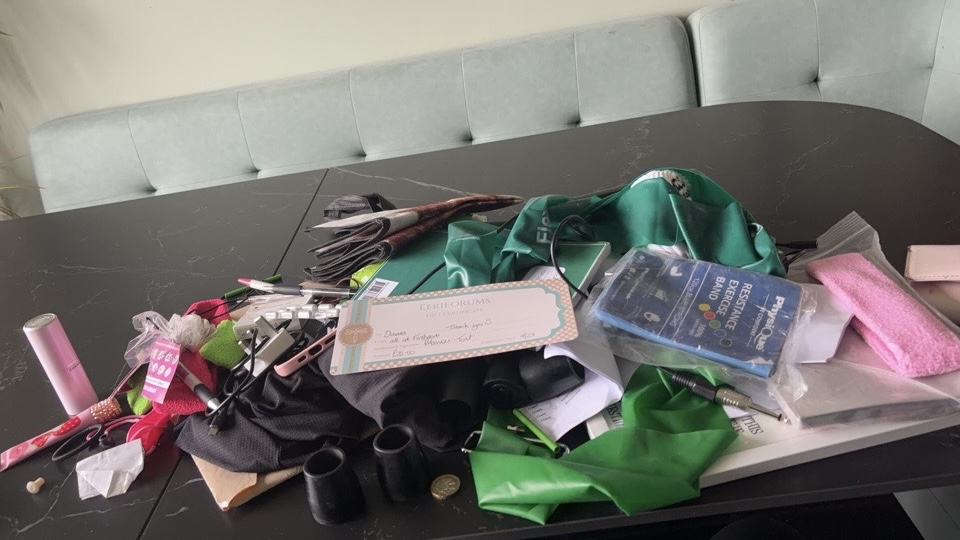
Earlier in the week, I emptied my work backpack onto the table. It looked remarkably like the inside of my mind: resistance bands, cables, paperwork, pens and assorted objects whose purpose I absolutely knew when I put them in there.
Probably.
The public version of the week looked rather polished. Orkney Dance & Fitness — ODAF for short — was named a UK Small Business Awards finalist for Best Social Impact, representing the Orkney Islands. We received another Heart & Soul Awards nomination. Our plans for the old kirk in Dounby were featured in the local paper. I spoke live with Rachel. Classes were busy.
The private version involved the backpack, the inbox and a brain attempting to hold seventeen tabs open without any indication which one was playing music.
Both versions are true.
That matters, especially for women in midlife. We can look at somebody else’s visible achievement and imagine it arrived with permanent confidence, perfect organisation and a calm nervous system. We compare their finished photograph with the heap on our own kitchen table.
But progress does not require you to become a different, tidier human first.
You can be capable and overwhelmed. You can be proud and still need reassurance. You can know your purpose and forget why you walked into the room. You can build something meaningful while carrying the mental load of work, family, home, health and everybody’s mysteriously disappearing water bottles.
When your brain edits out the evidence
I am very good at noticing what is unfinished.
There is always another email, another funding question, another class to prepare, another idea for the kirk and another thing I meant to do three Tuesdays ago. ADHD can make the most urgent or interesting thing feel enormous while quietly removing completed things from view. Once a task is done, my brain appears to file it in a locked cabinet marked No Longer Relevant.
Midlife can add another layer. Perimenopause and menopause are different for every woman, but the NHS includes sleep problems, tiredness, low mood, and difficulties with memory or concentration among possible symptoms. When you are already juggling a full life, brain fog does not merely make you forget a word. It can make it harder to hold onto the thread of your own story.
That is why watching the interview affected me so much.
For thirty minutes, I was not rushing around doing the work. I was sitting still and listening to myself explain it. I heard the distance between where I began and where I am now.
Sometimes we need that outside view. Not because an award, interviewer or newspaper gets to decide whether our work matters, but because they can briefly hold up a mirror when our own view has become crowded by the next task.
The danger is believing we must keep collecting proof forever. One more qualification. One more nomination. One more person saying, “Well done.” Then perhaps we will finally feel legitimate.
The healthier shift is different: letting recognition remind us to notice what was already true.
What the medical students saw
This week, two fourth-year medical students came to my Parkinson’s class. I invited them to experience some of our other sessions too, and they joined Boogie Bounce twice, FloorBarre and Fitness Pilates.
They were not only seeing exercise written on a care plan. They were seeing what community movement looks and feels like: different bodies and abilities in the room, exercises adapted, people encouraged, confidence growing and relationships forming.
ODAF is a community-focused non-profit social enterprise. We create inclusive opportunities to move and connect across Orkney, including rural communities where geography can make access more complicated. We are not the NHS, and I would never claim that one class magically prevents illness or removes pressure from health services. What we can do is help people find realistic, welcoming ways to be active and stay connected in ordinary life.
That sits comfortably with the refreshed UK Chief Medical Officers’ guidance published this summer. It emphasises that every movement counts, that the biggest gains come when somebody moves from inactivity to doing something, and that strength and balance matter throughout life.
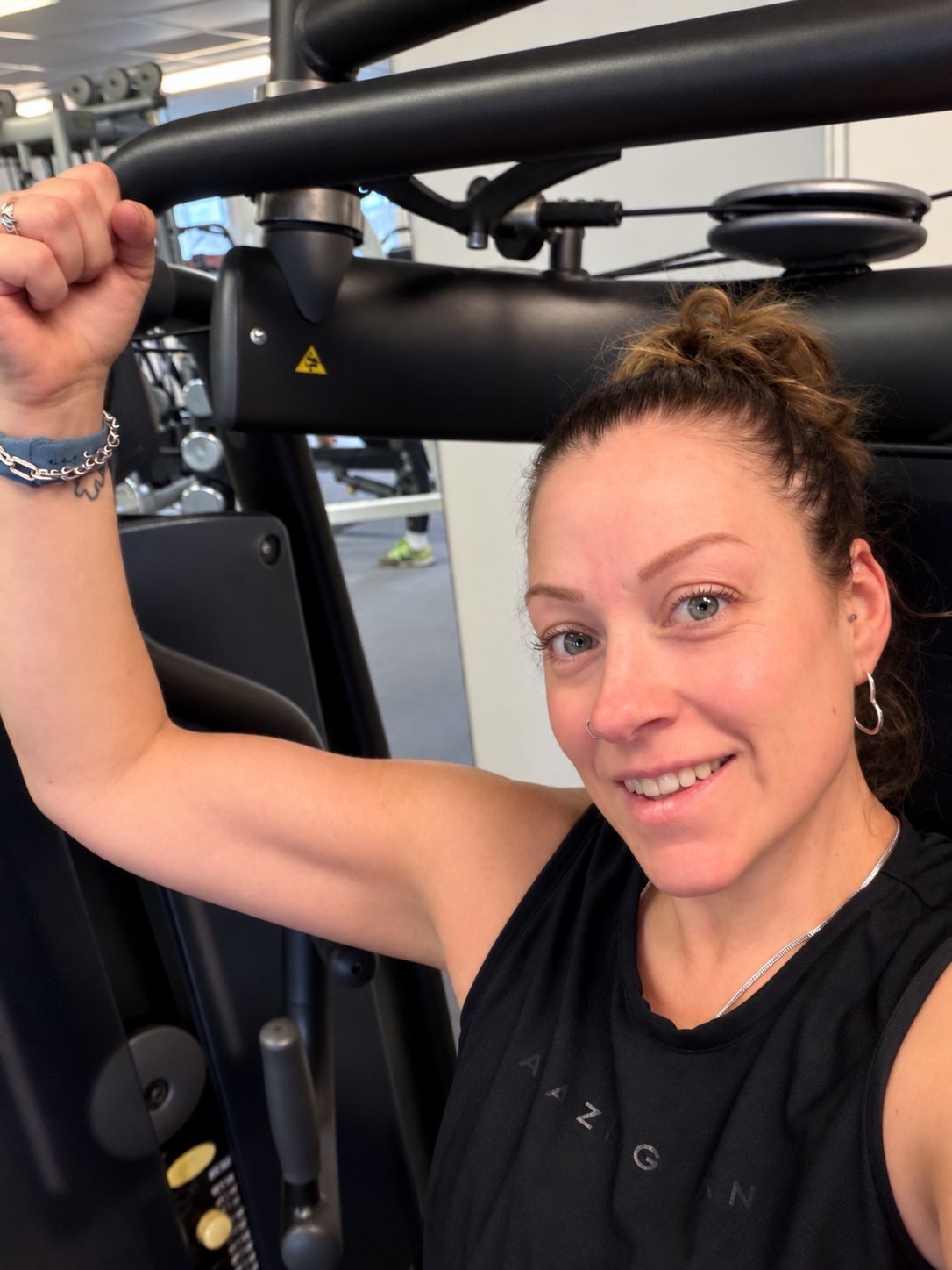
I thought about that at the gym this week when I increased my own repetitions and sets.
It was not a dramatic transformation photograph. It was a small increase that told me I am getting stronger.
For women in midlife, strength is not a punishment for what our bodies look like. It is part of caring for our future selves — supporting muscle, bone health, function and confidence as we age. And it still has to fit the body and energy we have today. More is not automatically better; consistent and appropriate is useful.
The parts that do not fit on a certificate
Friday was also Richard’s and my seventeenth wedding anniversary.
Last Sunday we had shared food and board games at church, and Richard and Summer had the best time. This week I also had brunch with a Baptist minister to talk about the possibility of a book study exploring exercise from a biblical perspective.
None of those moments belongs in an award application.
They belong in a life.
I am learning that success is not only the visible thing I built. It is also the Sunday I protected. The marriage that has held seventeen years of ordinary and extraordinary days. The food shared around a table. The family laughing over a board game. The conversation that connects faith, movement and caring for our bodies without turning either into another performance target.
This is where Move | Connect | Thrive becomes more than a strapline.
Move can be one more set at the gym, a bounce class, Pilates or the gentlest start your energy allows.
Connect can be a class community, students learning beyond a clinical setting, or a noisy board game after church.
Thrive is not doing everything brilliantly at the same time. It is building a life in which movement, people, purpose, support and rest all have somewhere to belong.
You do not have to become less human
The odd thing about starting to see my progress is that nothing else has suddenly become tidy.
The emails still exist. The backpack will refill. There will be days when ADHD makes starting feel like trying to turn over an engine in January. There will be times when sleep, hormones, health or the sheer weight of responsibility change what I can manage.
Recognition does not cancel any of that.
But the chaos does not cancel the progress either.
Perhaps that is the bit I want another midlife woman to hear this Sunday.
You do not have to wait until you are more organised, more energetic, more confident, thinner, calmer or finally “on top of things” before you are allowed to acknowledge what you have done.
Maybe you have kept a family going through a difficult season. Maybe you returned to movement after months away. Maybe you asked for help, set a boundary, learned something new or made one decision that your younger self would not have believed possible.
It counts even if nobody gave you a certificate.
It counts even if the kitchen is a state.
It counts even if you are already thinking about Monday.
Your Ridiculously Small Sunday Challenge
Find one piece of evidence from the past month — a photo, message, diary entry or completed task — and say aloud: “I did that.”
That is all. No gratitude journal to maintain. No list of ten achievements. Just one honest moment of letting yourself see what is already there.
And if movement is the next small thing you need, my free 15-Minute Magic Menopause Reset is designed for real midlife days — including the low-energy, foggy and not-remotely-perfect ones. Download my free 15-Minute Magic Menopause Reset.
You do not need to prove everything today.
You might simply need to see it too.
Until next Sunday 🩷
Donna xx
The Midlife Thrive Club
Move | Connect | Thrive
Let’s simply start together.
This article provides general information and is not a substitute for individual medical advice. Speak to an appropriately qualified healthcare professional about symptoms, recovery after a procedure or movement that may need to be adapted for your circumstances.